
What is mediation?
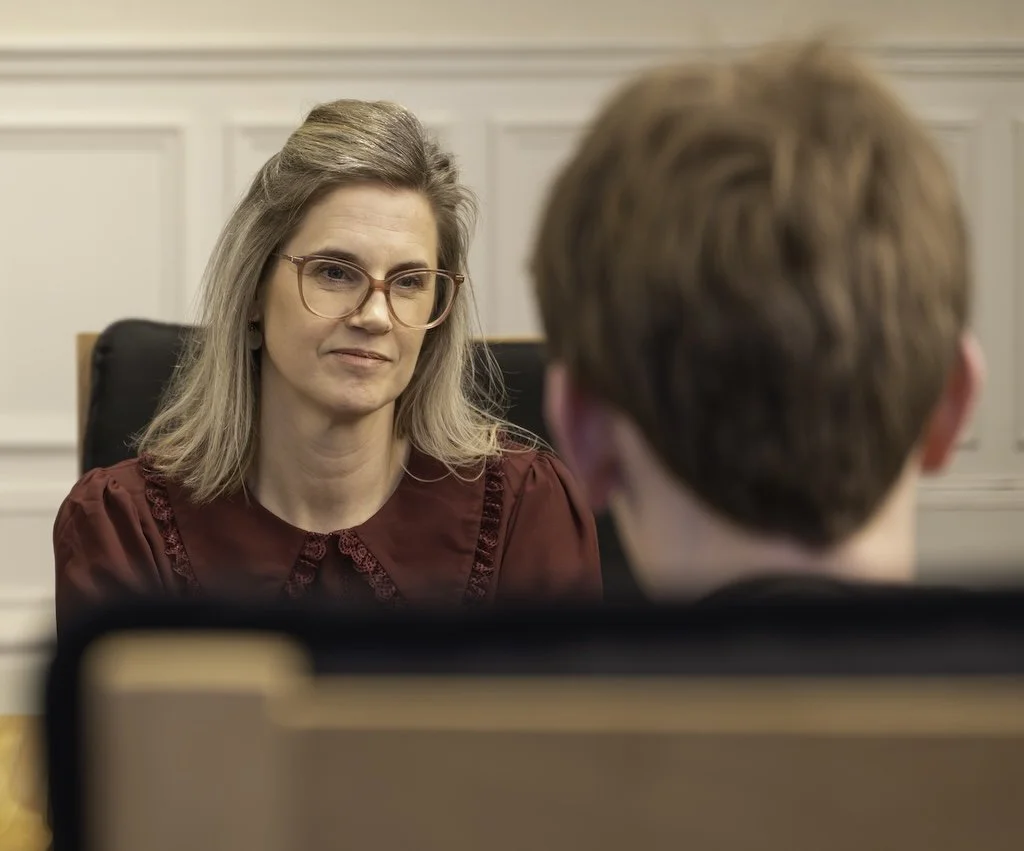
Mediation is essentially an opportunity to have a conversation with your ex partner or spouse, in a safe, neutral space, with an experienced mediator facilitating, supporting and helping you understand your options. You can talk about any issue that has arisen following your separation including the big aspects like financial agreements and child arrangements as well as aspects like interim plans and communication. Whatever is important to you can be raised and discussed.
Mediation is voluntary
Mediators are impartial
Mediation is confidential
You are the decision makers in mediation
Your children can have the opportunity to share what is important to them and have their voices heard through child inclusive mediation.
Mediation must be safe and you must feel able, with the support of the mediator, to discuss the issues without risk of harm or repercussions away from the mediation space. The mediator will speak to you separately before mediation begins to consider whether mediation is suitable and to discuss how the process can be arranged to ensure that you feel as comfortable as possible. This introduction chat is called a Mediation Information and Assessment Meeting or MIAM. It is the first step in the mediation process.

What is a MIAM?
A Mediation Information and Assessment Meeting (MIAM) is an individual confidential meeting with the mediator before the mediation process begins. It is an opportunity to share a little of what the issues are as well as your specific priorities and any aspects you are concerned or worried about.
During the MIAM we will consider whether mediation is suitable and whether and how it can be managed safely for you.
The mediator provides the following information during a MIAM:-
The mediation process, the principles of mediation and cost information.
The options available to you other than the mediation process.
Useful support that may assist you.
If you have children, how their needs and wishes can be prioritised and focused on.
Whether it will be possible to utilise the government voucher scheme £500
How we can create a mediation process to meets the needs of your family in terms of other supporting professionals that can become involved.
During the MIAM, the mediator will be assessing whether mediation is suitable and you are assessing whether you would like to start the mediation process.
An email setting out the important information will be sent to you following the MIAM. This is included within the cost of the MIAM.
Where you may consider an application to court to be necessary following a MIAM, a certificate to confirm your MIAM attendance can be provided. This would be included within the cost of the MIAM.
Common mediation questions
-
It is often to go over arrangements to ensure you are both clear and there isn’t any misunderstanding. The mediator can also help you consider aspects you may not have considered. Usually, it is helpful for your Parenting Plan to be as clear as possible as ambiguity or missing aspects can lead to tension and conflict moving forward.
Depending on the ages of your children, they could be given the opportunity to share their views including their hopes, ideas or suggestions with a mediator who could feed them back to you as parents. See Child Inclusive Mediation
-
Mediation can take place with you each in separate online spaces. This is sometimes called shuttle mediation. You wouldn’t see or hear the other person but all the information discussed would be relayed and shared by the mediator. Usually you would wait in a ‘zoom waiting room’ while the mediator is talking to the other person
-
Within divorce proceedings, a Consent Order can be drafted setting out the financial agreement reached in mediation and this is filed at court to be placed before a Judge for approval. Once approved, the Consent Order ia legally binding.
-
Yes! You would be expected by the court to try mediation in the first instance. If you agree the proposed changes, the mediation document can be read in conjuction with the Child Arrangement Order. If you consider it necessary to legally change or update the order you can apply to court after mediation to vary this by agreement ‘by consent’.
-
Yes! The mediator will help you create a Parenting Plan. It is usually better for parents and children if agreements can be reached amicably in mediation and embodied in a Parenting Plan rather than through court proceedings.
-
Yes. Pension experts are often invited into mediation sessions to explain how they can advise and explain options. Pension experts (often known as PODEs (pension on divorce experts) can advise on options and how to achieve the goal or outcome you are trying to achieve).
-
Not necessarily but we would always suggest that you take advice on the issues, particularly when it comes to finances. Solicitors can give specific advice on what you may be entitled to, how a court may view your case and what your worst or best case scenario might be if a Judge was being asked to decide your case. This information is often very helpful to have. It can give you the confidence you need to have the discussions in mediation. Mediators can give lots of accurate legal information and set out your legal options but they cannot give tailored legal advice as they need to remain impartial.
Mediation case studies
-
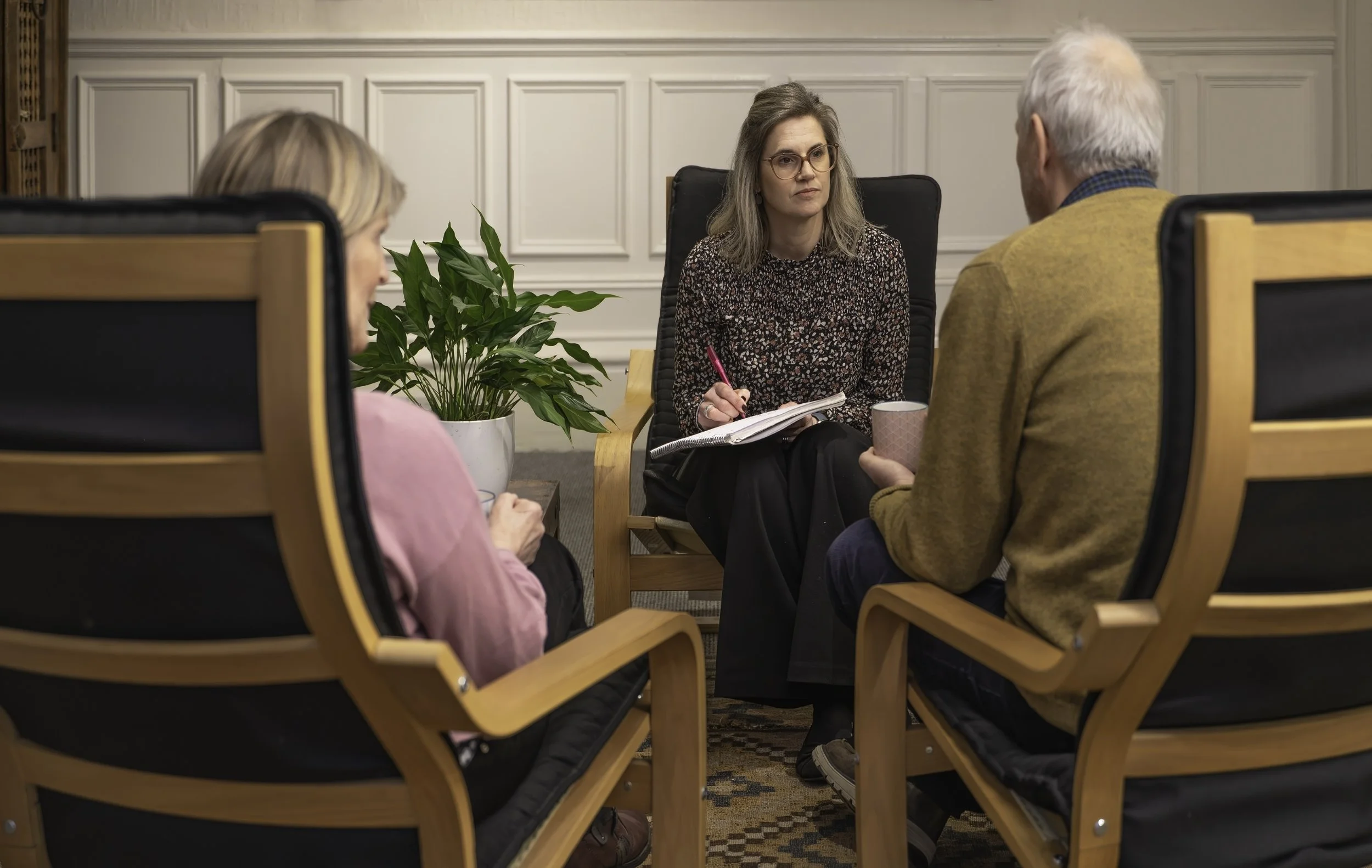
H (aged 50) and L (aged 51) were married but separated with two boys aged 15 and 13. They needed to find a way to deal with their house, pensions and debts and also wanted to discuss arrangements for their children
H earned slightly more than L. Both parents wanted to ensure stability for their children particularly until after their youngest has finished his GCSEs. H was considering moving out and finding a rental property temporarily.
They spent time considering the timescales for when the family home could be sold and agreed that this would be marketed for sale in the September after their youngest child sat his GCSEs.
Through discussion, they considered different ways the proceeds of sale could be divided and felt that an equal division would be fair and would likely enable them to each be able to afford a smaller property of their own.
They both felt that it was important for them to each have a similar pension provision moving forward. H’s pension was greater than L’s. Using the mediators support, they instructed a Pensions on Divorce Export to advise on what percentage of H’s pension would need to be shared to achieve overall equality of pension provision.
They considered that the delay in a sale would enable L to complete her current additional training and thereafter, she expected to increase her salary. They both expected their income and earning capacity to be similar in approximately 2 years time.
They discussed and agreed how the contents should be dealt with and how the interim mortgage payments and bills would be paid between now and when the house sells.
The mediator supported them in gathering all the relevant financial documents to confirm their circumstances (known as financial disclosure). This ensured that the figures being discussed were accurate and legal advice could be obtained.
A clear summary of their proposed financial agreement was created at the end of the mediation process. The last stage was for them to obtain legal advice on the proposals and for a Consent Order to be drafted by solicitors and filed at court as part of the divorce. Once approved, the Consent Order is legally binding.
Arrangements for the children were discussed and some elements clarified. A Parenting Plan was created to embody the agreement reached. The parents felt confident that they could continue to work together in this regard but knew that they could request another mediation session at any point in the future should this seem helpful.
-
M (aged 32), D (aged 33). Children aged 7,4,4 – Children mediation
Both parents needed to discuss and agree all aspects of parenting including the general pattern, school holidays, birthdays, Christmas and expectations regarding communication between the parents. With the mediators help, they were able to agree an interim plan to try and then review a few weeks later in a second mediation session.
The plan needed tweaking and the changes were discussed and agreed with the mediators help. In a third session, they both considered the revised plan to be something that was working well for the children. During 3 mediation sessions, they worked through the different aspects. They created some boundaries and expectations with regard to communication and both reported that communication had improved. They were pleased to have been able to create a Parenting Plan together as neither had wanted to have to involve the court.
One parent felt confident that they would be able to navigate future/new issues together. The other parent was less sure and preferred mediation as it offered a structured, focused and supported conversation.
The mediator reminded them that they were welcome to re-refer to mediation either on an ad-hoc basis or on an annual basis for a co-parenting review.
-
T (aged 45) and K (aged 45) have a daughter (aged 13). They are not married but jointly own a property and also have debts, vehicles and dogs to discuss
T wanted to buy K out of the house. K agreed to this in principle but they couldn’t agree on the valuation of the property and how the current renovation work would be dealt with. Through discussion, they were able to agree on a figure they considered to be fair for the purposes of negotiation. The mediator helped to calculate the equity and the lump sum T would need to pay K (as they had agreed to share the equity equally). There was a pause in mediation while T checked if he could raise the necessary funds. They spent time discussing the debts, vehicles and dogs and were able to find an outcome that was acceptable to each. This was drafted into a Summary of Proposals and the steps needed for them to legally implement the property transaction were clearly set out.
Their daughter was resistant to spending time with T. Both parents wanted to give her the opportunity to share what was important for her and have a voice in the process. She met with the mediator briefly (as part of child inclusive mediation) and shared how upset and angry she was feeling. She wanted this to be relayed to her dad and she had some ideas of how, maybe, she would in time, like arrangements to look.
Liz relayed this to both parents and they agreed a steady plan to take into consideration what she had said. Liz also suggested some local support from a charity she might like to look into. Both parents commented that she had found this really helpful and had accessed some of the additional support offered by the charity. Dad acknowledged that a slow and steady approach was likely to have better outcomes and relations have slowly improved.